


One shared idea, two countries

What we now call English style, the botanical patterns, the heavy leather, the detailed craftsmanship, has its roots in a movement that fundamentally changed how people saw everyday objects.
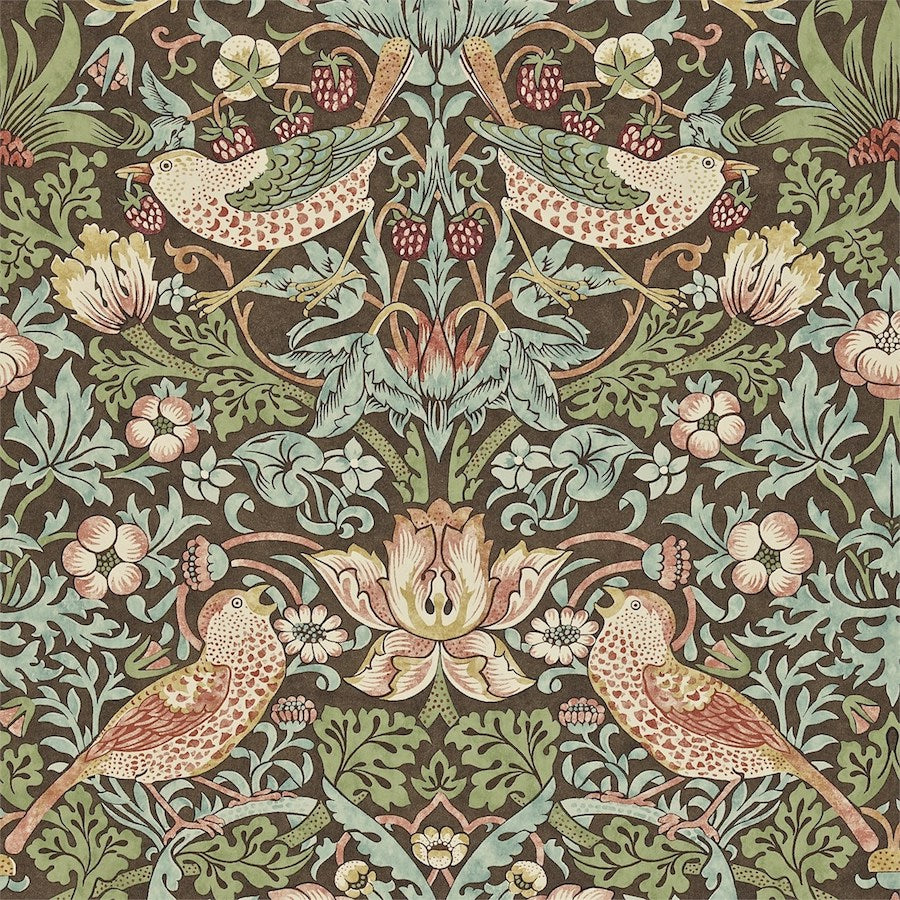
In 1860s England, William Morris started what became the Arts & Crafts movement. Morris was an artist, designer and activist, and his conviction was simple but radical: the things we surround ourselves with at home deserve the same care as art. Craft over industry. Natural materials over synthetics. Beauty as part of everyday life. He designed wallpapers, fabrics and furniture according to that principle, with patterns taken straight from the English countryside and made using craft techniques he had learned himself. His wallpapers and fabrics are still produced today under the Morris & Co brand.
What is less well known is how deeply Morris's ideas influenced Scandinavia.
Carl Larsson was one of Sweden's most beloved artists. His watercolours of the family home in Sundborn, Dalarna, were published as books around the turn of 1900 and became a national sensation. The pictures showed bright rooms, floral textiles, wooden furniture and care for every detail. In practice they defined what a Swedish home should look like, and they still influence us today.
But it was his wife Karin who created the interiors. Karin Larsson was a trained textile artist and designed everything in the home: woven rugs, embroidered curtains, textiles in every room. Her inspiration came directly from Morris and the English Arts & Crafts movement. The same philosophy: handmade over factory-made, motifs from nature over abstraction, beauty in the everyday.
A few years later the writer Ellen Key expressed the same idea in her 1899 essay "Beauty for All". Her message was that good design should not be reserved for the wealthy; everyone deserves a beautiful home. It was William Morris translated into Swedish. And it became a cornerstone of the Scandinavian design tradition we still build on.
When English craftsmanship is placed in a Scandinavian room, there is no collision. It is a reunion.
Where the traditions meet
The English craft tradition offers weight, a wealth of materials and fine detailing. Deep-buttoned sofas, hand-printed wallpapers, fabrics in wool and velvet with the kind of texture only natural materials give.
The Scandinavian aesthetic offers light, air and restraint. Tall windows, pale floors, proportions that breathe.
Together they create a balance neither tradition achieves on its own. The English gives a room substance and character. The Scandinavian gives it room to breathe. A sofa from Duresta, British craftsmanship since 1938, each sofa built by hand in England, needs no explanation in a room with pale wooden floors and tall windows. It simply works. A wallpaper from Sanderson on a white wall in Nordic daylight takes on a completely different presence than in a dark English living room: softer, calmer, but with the same depth.
It is not about copying an English style. It is about taking the qualities of English craftsmanship and placing them where they are seen in a new light.
Materials that speak the same language

Some materials act as a bridge between the traditions.
Linen. As central in English country houses as in Scandinavian summer houses. In curtains, upholstery and bed linen it creates a shared foundation that ties the room together, whichever tradition the rest of the furniture belongs to.
Solid wood. Oak in different finishes, pale and white-pigmented in the Scandinavian part of the room, darker and patinated in the English. The same material, different expressions, but they live together.
Brass. The warm alternative to chrome and nickel. In English lamps, hardware and details it adds a lustre that enhances the natural materials around it.
Wool and velvet. English fabrics in heavier qualities, from brands such as Colefax & Fowler and Sanderson, add the tactile richness that Scandinavian rooms, with their clean surfaces, sometimes lack. English curtains in heavy wool in front of a large window. A cushion in a Morris fabric on a sofa in pale linen. The details that make the room complete.
The room decides the meeting
A turn-of-the-century apartment with ornate plasterwork and tall windows already has classic proportions. English craftsmanship reinforces what is there. Wallpapers from Morris & Co on a wall that already has the right scale. A sofa from Duresta that matches the room's ambitions. The room has the skeleton. English craftsmanship dresses it.
In a modern home with open spaces and large windows, the English adds the warmth the architecture deliberately leaves open. A botanical wallpaper on a feature wall gives presence to an otherwise minimalist room. Soft, rounded seating from Jio Möbler offsets the straight walls.
In a villa by the coast or in the countryside, with more space, more daylight and a different rhythm, each room can have its own character. The dining room with a Chesterfield from Brittfurn's own collection and dark tones. The bedroom with a Willow Bough wallpaper and linen in natural colours. The English gives each room a distinct personality. The Scandinavian holds the whole together.
It is in the meeting between weight and light, between richness of detail and simplicity, between English craftsmanship and Scandinavian thoughtfulness, that the most interesting rooms emerge. Not because it is a trend. But because it is a tradition that has been going on for more than a hundred years.
Three ways to begin


Discover English craftsmanship among our brands or visit us at Sturegatan 20.

